
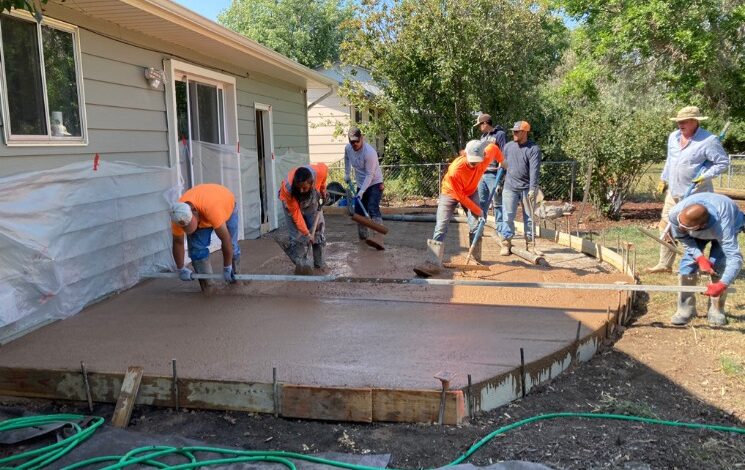
Hairline cracks in a concrete patio are normal and rarely a reason to replace it. Replacement makes sense when sections have sunk or heaved, cracks are wide with one side higher than the other, the surface is flaking away, or water drains toward your house. Here is how to tell which situation you are in, and what each option involves.
Signs your patio just needs maintenance
- Thin hairline cracks that are not getting wider
- A slab that is still level and drains away from the house
- Faded color or sealer on stamped or colored concrete
- Minor surface stains
All concrete develops small cracks as it cures and as the ground moves through the seasons. That is why patios have control joints: they give cracking a planned place to go. If your patio is level and the cracks are hairline, cleaning and resealing is usually all it needs. Stamped and colored concrete should be resealed every few years to protect the color.
Signs your patio should be replaced
- Sunken or heaved sections that create trip hazards or change how water runs
- Wide cracks with one side higher than the other, a sign the ground underneath has moved
- Flaking and pitting (spalling) across large areas, usually from freeze-thaw and de-icing salts
- Water pooling against the house or running toward the foundation
- Repeated patches that keep failing
Most of these problems start underneath the slab, with soil that was poorly compacted or has washed out. Patching the surface does not fix the ground, which is why patches on a failing patio rarely last.
Can you replace just part of a patio?
Often, yes. If the damage is limited to one section between control joints, that section can sometimes be removed and replaced on its own. New concrete never matches old concrete exactly, but planning where the new section meets the old one can make it look intentional. If the problems are spread across the whole patio, full replacement is usually the better value.
What replacing a patio involves
A full concrete removal and replacement follows the same steps as a new concrete patio:
- Tear out and haul away the old slab
- Remove poor soil and rebuild the base with compacted gravel
- Form the new patio with the slope set to carry water away from the house
- Add reinforcement (we recommend steel or fiberglass rebar)
- Pour, finish and cut control joints, typically 4 inches thick with a 4,000 PSI mix
Most residential patio projects take 2 to 4 days depending on size, and every job comes with our 12-month warranty against shifting or cracking.
Upgrade while you replace
Replacement is the cheapest time to change the size, shape or finish of a patio, because the old slab is coming out anyway.
| Finish | Typical price |
|---|---|
| Sand-finished (exposed aggregate) concrete | $17 to $19 per sq ft |
| Stamped concrete | $21 to $25 per sq ft ($5,000 job minimum) |
| Line pump (typically needed for backyard patios) | Adds $450 |
| Road base under the new slab | $52 per ton |
Compare the options in our guide to broom, sand-finished or stamped concrete, and see the full price list on our services page. Broom-finished patios are priced on a free consultation.
Not sure which you need?
We will look at your patio during a free consultation and tell you honestly whether it needs maintenance, a partial replacement or a full replacement. See finished patios in our project gallery and more answers in our concrete FAQ. We serve Golden, Lakewood, Arvada, Wheat Ridge and the rest of our service areas.
Ready for a quote? Call (720) 636-8986 or request a free concrete quote and we will call you back to schedule a free concrete consultation.